Dispatch
Hongya Cave: A Stunning Riverside Landmark in Chongqing
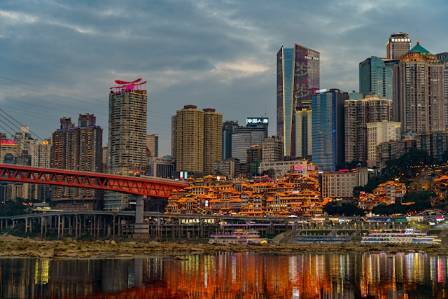
Hongya Cave, known as “Hongyadong” in Chinese, is situated along the riverside area where Cangbai Road meets the Yangtze River and Jialing River. The most distinctive feature of this famous attraction is its traditional stilted wooden architecture, which perfectly represents the architectural style of old Chongqing.
Cassiel Rowan
Rider
Desk note
Full dispatch and transfer tips sit below.
Line
Blue Line Walk
Hongya Cave, known as “Hongyadong” in Chinese, is situated along the riverside area where Cangbai Road meets the Yangtze River and Jialing River. The most distinctive feature of this famous attraction is its traditional stilted wooden architecture, which perfectly represents the architectural style of old Chongqing.
Hongya Cave preserves one of the most complete and beautifully decorated collections of stilted buildings in Chongqing. Built along the mountainside and beside the river, the complex creates a unique landscape where visitors can enjoy views of the city’s famous landmarks, including the nearby Monument to the People’s Liberation.
Today, Hongya Cave has become a well-known destination combining shopping, dining, entertainment, and urban culture. It offers visitors the chance to experience the city’s unique stilted architecture, enjoy the surrounding natural scenery, and explore the traditional charm of Chongqing and Sichuan culture.
Walking through the ancient streets of this mountain city, visitors can admire the local lifestyle, watch the meeting point of the Yangtze River and Jialing River, taste authentic Chongqing cuisine, and enjoy the lively atmosphere around the Monument to the People’s Liberation.
What to Experience in Hongyadong
Architectural Style and Design
Hongya Cave is not only a scenic attraction but also an important symbol of Chongqing’s history, culture, and urban identity. The stilted buildings belong to the traditional wooden “ganlan” architectural style, which is specially adapted to Chongqing’s mountainous terrain.
The buildings are constructed against the hillside, creating a unique layered appearance when viewed from a distance. Their structures are simple yet practical, with flexible room arrangements and no strict symmetrical pattern. The buildings follow the natural slope of the mountain, forming distinctive streets and pathways.
The Hongya Cave scenic area is often described through the concept of “one style, three wonders, four streets, and eight views,” representing the unique leisure culture and urban character of Chongqing.
“One style” refers to the special leisure atmosphere created by the combination of architecture, culture, and riverside scenery.
“Three wonders” include the stilted buildings, the traditional marketplace and old streets, and the unique cultural atmosphere of Chongqing.
“Four streets” represent the different themed streets within Hongya Cave, including the bar street, the Bayu cultural expression street in Tiancheng Alley, the ancient stone pathway beside the cliff, and the Cangbai Road cultural street. Among them, the stone pathway area is famous as a food street where visitors can discover many local specialties.
The “eight views” include the beautiful greenery around Hongya Cave, the meeting point of the Yangtze and Jialing Rivers, the stilted building complex, the sculpture displays, the city-view balconies, the bar culture area, the riverside food street, and the sunset scenery over the Jialing River.
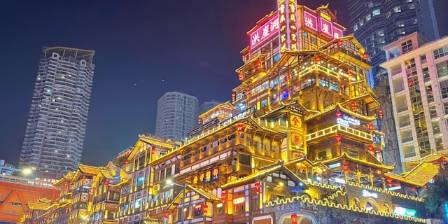
Many visitors notice that the appearance of Hongya Cave resembles the magical world shown in the Japanese animated film Spirited Away. When night arrives, thousands of lights illuminate the buildings, creating a dreamy atmosphere. The warm golden lights from the wooden structures, together with the illuminated boats traveling along the river, make the entire area look like a scene from a fantasy world.
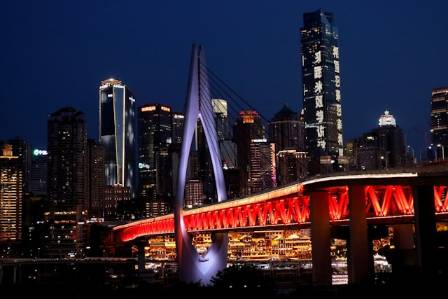
The nighttime view of Hongya Cave is especially impressive. The glowing buildings reflect on the rivers, creating one of Chongqing’s most iconic urban landscapes.
Local Food and Shopping Experience
A visit to Hongya Cave is incomplete without trying its famous local cuisine. The commercial areas inside the attraction are divided into several themed sections, including the bar street, Bayu cultural street, food street, and riverside city balcony.
Each area combines traditional Chongqing culture with modern entertainment elements. Visitors can find international-style bars, fashionable restaurants, and unique cultural shops throughout the complex.
The shopping streets are filled with handmade crafts and traditional products. The Bayu cultural street in Tiancheng Alley showcases local traditions through classic architecture, including blue brick walls, stone tiles, colorful roof decorations, and traditional handicrafts created using the front-shop-and-back-workshop model.
The food street is one of the highlights of Hongya Cave, offering a wide variety of Chongqing specialties. Visitors can enjoy famous dishes such as Chongqing hot and sour noodles, spicy skewers, boiled fish with pickled vegetables and chili, and cold noodles with sesame sauce.
Besides exploring the streets, visitors can also take a sightseeing boat along the Yangtze River and Jialing River. From the water, the illuminated Hongya Cave buildings create a breathtaking nighttime scene that combines traditional Chinese architecture with modern city lights.
Nearby Attractions in Chongqing
Chongqing is known by many names, including the Mountain City, the City of Yu Culture, the Fog City, and the City of Bridges. It is a place where historical heritage, cultural traditions, and natural landscapes come together.
Visitors who explore places such as Simian Mountain and Wulong Fairy Mountain can enjoy spectacular views of Chongqing’s mountains and countryside from high elevations.
For those interested in history, attractions like Zhazi Cave and the Korean Provisional Government Site provide insight into important historical events and cultural stories.
Ciqikou Ancient Town and Fengdu Ghost City offer visitors opportunities to experience traditional architecture, local customs, and the unique cultural heritage of Chongqing.
Nearby stops
 STOP
· en
The Medieval Manor: The Foundation of Rural Society
Sophia Langston
 STOP
· en
Creamy Mushroom Risotto
Jordan Blake
 STOP
· en
AI Drawing Styles: The 10 Most Popular Styles
James
 STOP
· en
The Rise of 'Knife-Free' Cooking: How Japan’s Youth Are Redefining Home Cooking
Bella Powell
 STOP
· en
7 Sofa Dressing Tips to Create a Stunning Living Room
Lily
 STOP
· en
Flower Arranging Basics: A Beginner's Guide
Skyler Reed