← Back to desk11 min ride
Dispatch
Kirigami: The Art of Cut-and-Fold 3D Paper Sculptures
Summer 2015 remains etched in my memory as the season I stumbled upon a world of paper that would forever ignite my crafting passion. I was traveling to Paris with my mother, and no trip to the City of Light could be complete without a visit to the Eiffel Tower—my favorite landmark in the bustling metropolis. The day was scorchingly hot, with the sun blazing down on the Champ de Mars, where we wandered leisurely, browsing the array of vibrant stalls that lined the pathways.
N
Noah Harrison
Rider
Desk note
Full dispatch and transfer tips sit below.
Line
Blue Line Walk
A Serendipitous Encounter in Paris: My Introduction to Kirigami
Summer 2015 remains etched in my memory as the season I stumbled upon a world of paper that would forever ignite my crafting passion. I was traveling to Paris with my mother, and no trip to the City of Light could be complete without a visit to the Eiffel Tower—my favorite landmark in the bustling metropolis. The day was scorchingly hot, with the sun blazing down on the Champ de Mars, where we wandered leisurely, browsing the array of vibrant stalls that lined the pathways. Amidst the chatter of tourists and the scent of freshly baked crêpes, one stall stopped me in my tracks: hanging from its frames was a breathtaking paper galleon, its sails billowing as if caught in a gentle breeze, surrounded by meticulously crafted foaming waves that seemed to ripple with movement. It was far from the only marvel on display; the stall was a treasure trove of paper art—intricate replicas of historical buildings, delicate paper figures of people and plants, and entire miniature worlds rendered in nothing but sheet paper. I lingered there for what felt like hours, conversing with the artist behind these creations, who generously shared the secrets of his craft, taught me the basic techniques, and even gave me the essential tools to start my own kirigami journey. That chance encounter in Paris was my first step into the enchanting realm of kirigami, a art form that would blend my love for detail and creativity into something tangible and deeply rewarding.
What Is Kirigami? Defining the Cut-and-Fold Art Form
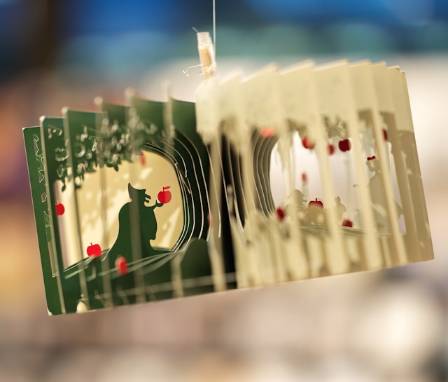
Kirigami, derived from the Japanese words “kiru” (to cut) and “kami” (paper), is a traditional yet innovative Japanese art form that combines precise paper cutting and folding to transform flat, two-dimensional sheets into intricate three-dimensional structures. Unlike its more widely known cousin origami, which relies solely on folding without any cutting, kirigami embraces cutting as a fundamental and non-negotiable element—indeed, it is the act of cutting that gives kirigami its unique ability to create dynamic, layered forms. Developed in the 1980s by Japanese architect Masahiro Chatani, kirigami has evolved from simple decorative pieces to complex works of art, spanning from playful pop-up cards to elaborate architectural models. The core process typically involves making all necessary cuts first, then folding and unfolding the paper to reveal the final 3D figure; these figures—whether geometric shapes, architectural landmarks, landscapes, or even figurines—take shape as the paper is opened, with designs varying in opening angles: 90°, 180°, or even 360°. There is also a 0° variant, where no folding is required at all; instead, three-dimensionality is achieved by stacking cut pieces atop one another, creating layered sculptures that stand independently. What makes kirigami truly captivating is its versatility: it can be as simple as a homemade pop-up card that delights a child when opened, or as complex as a museum-worthy sculpture that showcases the artist’s mastery of precision and design.
Kirigami vs. Origami: Unraveling the Key Differences
For many, kirigami and origami are easily confused, as both involve paper and folding, but their core principles and creative possibilities are distinctly different. The most fundamental distinction lies in the use of cutting: origami strictly prohibits any cutting, relying entirely on folding, creasing, and manipulating the paper to create forms, which places significant limitations on the complexity and dimensionality of the final piece. Kirigami, by contrast, not only allows cutting but requires it, using strategic cuts to create slits, tabs, and layers that enable the paper to expand into three-dimensional shapes when folded or opened. This freedom to cut opens up a world of possibilities that origami cannot match—kirigami artists can create intricate lace-like patterns, dynamic pop-up structures that move as the paper is manipulated, and elaborate landscapes with multiple layers and textures. Another subtle difference is in the creative process: origami often involves folding in a sequential, step-by-step manner to build the form gradually, while kirigami typically begins with planning and cutting the flat paper, then folding to bring the 3D structure to life. Despite these differences, both art forms share a reverence for precision, patience, and the transformation of a simple sheet of paper into something extraordinary, and both have captivated crafters and artists around the world for decades.
The History of Kirigami: From Greeting Cards to Global Art
While the term “kirigami” was formalized in the 1980s, the practice of cutting and folding paper to create decorative or three-dimensional objects has deep roots in various cultures—from Chinese paper cutting (jianzhi) to European pop-up books. However, the modern art form we know as kirigami was officially pioneered by Japanese architect Masahiro Chatani in the 1980s, shortly after he became a newly appointed professor at the Tokyo Institute of Technology. Chatani’s innovation was to merge architectural principles with paper craft, creating what he termed “origamic architecture”—intricate paper sculptures of buildings and structures that could be folded flat for storage and opened to reveal stunning 3D forms. His initial experiments focused on designing unique, handcrafted greeting cards that would surprise and delight recipients, but his work quickly evolved into a recognized art form. Until his death in 2008, Chatani was widely regarded as the world’s foremost origamic architect, leaving a legacy of techniques and designs that continue to inspire artists and architects today. Over the decades, kirigami has transcended its Japanese origins to become a global art form, with artists and crafters around the world adapting and expanding its techniques, merging it with other art forms, and even exploring its applications in fields beyond crafting.
Kirigami and Architecture: The Rise of Origamic Architecture
The intersection of kirigami and architecture—known as origamic architecture—is one of the most fascinating and influential aspects of the art form, a testament to Masahiro Chatani’s vision of merging his architectural expertise with paper craft. Origamic architecture involves creating precise, scaled-down models of buildings, bridges, and other architectural structures using kirigami techniques, resulting in pieces that are both aesthetically pleasing and structurally sound. What makes these pieces unique is their ability to fold flat, making them easy to store, transport, and mail—an innovation that revolutionized the world of paper art and greeting cards. Beyond decorative pieces, origamic architecture has also inspired real-world architectural design, with modern architects drawing on kirigami’s principles of folding and cutting to create innovative building designs, deployable structures, and even lightweight, durable materials. For example, some architects have experimented with kirigami-inspired facades that can adapt to changing weather conditions, opening and closing like a paper sculpture to control light and temperature. Chatani’s work laid the foundation for this fusion of art and architecture, and his influence can be seen in countless contemporary projects that blend creativity with structural engineering.
Kirigami Meets Modern Technology: CAD, Laser Cutting, and AI
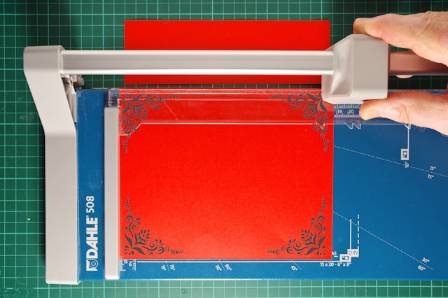
In recent years, kirigami has embraced modern technology, pushing the boundaries of what is possible with paper and opening up new avenues for creativity and precision. One of the most significant advancements is the use of Computer-Aided Design (CAD) software, which allows artists and designers to create highly detailed kirigami patterns with unprecedented accuracy, eliminating the guesswork and errors that can come with hand-drawing. These digital patterns can then be paired with laser cutting technology, which makes clean, precise cuts through paper (and even other materials like cardstock or thin wood) at a speed and level of detail that hand-cutting simply cannot match. This combination of CAD and laser cutting has enabled the creation of increasingly complex kirigami sculptures—intricate lace-like patterns, multi-layered landscapes, and elaborate architectural models that would be nearly impossible to create by hand. Beyond CAD and laser cutting, some architects and designers are even exploring the use of Artificial Intelligence (AI) systems inspired by kirigami principles to solve complex design problems. These AI systems analyze the way paper folds and cuts to generate innovative solutions for deployable structures, material efficiency, and spatial design, bridging the gap between traditional craft and cutting-edge technology.
Exploring the Diverse Types of Kirigami
Origamic architecture and kirigami encompass a wide range of styles and techniques, each with its own unique characteristics, challenges, and creative possibilities. One of the most popular and accessible styles is the Pop-Up Style (90° angle), where a folded paper is carefully cut so that when opened to a 90-degree angle (similar to the pages of a book), a three-dimensional image pops out. This style is widely used for greeting cards, children’s books, and decorative art, thanks to its dynamic and visually striking effect. Closely related is the 180° Pop-Up style, where the paper must be opened completely flat (180 degrees) to reveal the 3D structure, allowing for larger, more expansive designs that can be displayed as standalone sculptures. Another innovative technique is the Punched Out Technique, popularized by artist Takaaki Kihara, which involves “punching out” a 3D structure from a flat card—this method creates intriguing shadow effects through the empty cutouts, adding depth and complexity to the design, while also offering practical benefits like easy storage and transport due to its flat, compact form. Less common but equally captivating is 360-Degree Folding, where the paper is opened and folded completely in the opposite direction to form a full 360-degree angle, creating immersive, panoramic sculptures that can be admired from every angle, making them ideal for display pieces and art installations.
My Kirigami Journey: From Parisian Galleon to Pop-Up Cards
Inspired by the paper galleon I saw in Paris, I decided to make that my first kirigami project—a bold choice, as it was a long and complex piece, but I was determined to give it as a birthday gift to my husband. The process was far more challenging than I anticipated: I spent hours studying the patterns, making precise cuts with a small knife, and carefully folding each section to ensure the sails stood tall and the waves looked realistic. There were moments of frustration when a cut went slightly wrong or a fold refused to hold its shape, but I persisted, driven by the memory of that stunning Parisian stall and the desire to create something meaningful. When I finally finished, the galleon was even more beautiful than I had imagined, and my husband’s reaction—pure delight and amazement—made all the hard work worth it. Some might argue that the galleon is not strictly traditional kirigami due to its complexity and layered structure, so I next turned to smaller, classic pop-up cards to master the fundamentals. These simpler projects allowed me to refine my cutting and folding techniques, experimenting with different paper types and patterns, and I found joy in creating small, heartfelt cards for friends and family. While kirigami is just one of many crafting techniques I have explored over the years—my passions have since led me to lucet, embroidery, and string art—I have always held a special place for it in my heart, and I often find myself daydreaming about returning to it with the new skills I have acquired.
Kirigami Tips, Templates, and Resources for Beginners
For anyone looking to start their own kirigami journey, the most accessible and popular project is the pop-up greeting card—it is simple to make, requires minimal tools, and is readily available in gift shops as inspiration. There are also countless free resources online, including printable kirigami patterns from artists like Maria Victoria Garrido, which come complete with step-by-step instructions and are perfect for beginners. When working with these patterns, it is important to pay close attention to the lines: different line styles (dashed, solid, dotted) typically indicate where to fold and where to cut, so taking the time to understand the pattern will save frustration later. Choosing the right paper is also crucial—thick cardstock or construction paper works best for printing templates, as it holds its shape well when folded and cut, while thinner paper may tear easily. As for tools, a proper kirigami knife (or a sharp paper cutter) is essential for clean, precise cuts; I also recommend using a ruler to guide your cuts and the back of the knife blade to score fold lines—this creates a clean, sharp crease that makes folding much easier. For those seeking more inspiration, I have created a “Kirigami” board on Pinterest where I collect my favorite crafts, patterns, and tutorials, and there are countless other online communities and blogs dedicated to sharing kirigami ideas and tips. Two great beginner templates to start with are the 90°-page castle and the 90°-page piano, both of which teach basic cutting and folding techniques while resulting in a fun, recognizable final product.
Looking Ahead: My Kirigami Future and a Call for Opinions
I’ll admit, I haven’t made many kirigami projects in recent years—my crafting journey has taken me down other paths, from historical lucet research to embroidery and string art—but I have never forgotten the joy and satisfaction that comes from transforming a flat sheet of paper into a three-dimensional work of art. As time has passed, I have acquired new crafting skills—better precision, a deeper understanding of materials, and more confidence in designing my own patterns—and I find myself wondering how these skills would translate to kirigami. Would I be able to tackle more complex projects now? Could I design something entirely from scratch, rather than following existing templates? These questions have been lingering in my mind, and I am eager to hear your opinions: should I embark on a new kirigami project? If so, what should I create? A new architectural model? A personalized pop-up card? Or something entirely unexpected? I would love to read your thoughts and suggestions in the comments below—your input might be just the push I need to return to this beloved art form and create something new and exciting.
Nearby stops
 STOP
· en
Cool Facts About The Lotus Flower
Kellan Rhodes
 STOP
· en
10 Celebrated Beach Artworks Across Art History
Henry
 STOP
· en
Anthurium: Easy Houseplants That Offer Long-Lasting Color
Elina Rhodes
 STOP
· en
Top 3 Traditional Swiss Bread Rolls
Blaine Rutledge
 STOP
· en
10 Epic Coastal Cliffs
Cleo Harper
 STOP
· en
Modern Performance Vehicles That Are Destined to Become Highly Valuable Future Classics
Nina Brooks