← Back to desk4 min ride
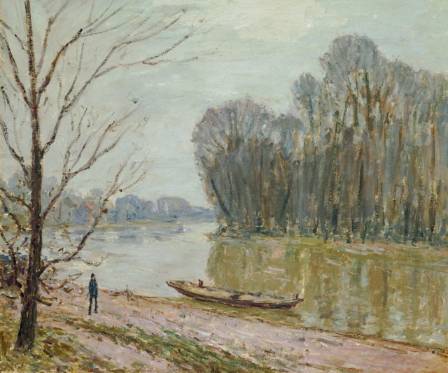
Dispatch
A Collection of Notable River and Canal Paintings
The subject of rivers and canals has captivated artists for centuries, offering endless opportunities to explore light, reflection, movement, and the interplay between nature and human habitation. This selection highlights ten significant paintings from the 19th and early 20th centuries that masterfully depict waterways, ranging from serene European scenes to vibrant Venetian vistas.
H
Helena
Rider
Desk note
Full dispatch and transfer tips sit below.
Line
Blue Line Walk
The subject of rivers and canals has captivated artists for centuries, offering endless opportunities to explore light, reflection, movement, and the interplay between nature and human habitation. This selection highlights ten significant paintings from the 19th and early 20th centuries that masterfully depict waterways, ranging from serene European scenes to vibrant Venetian vistas.
1. Claude Monet – The Geese (c. 1874)
This early Impressionist work by Monet likely depicts a quiet moment along the Seine River. Characterized by loose, visible brushstrokes, the painting captures the dappled effects of sunlight on water and foliage. The inclusion of geese adds a touch of rural life and movement, showcasing Monet's dedication to painting en plein air (outdoors) and his focus on transient atmospheric conditions.
2. Pierre-Auguste Renoir – The Doges’ Palace, Venice (c. 1881)
During a trip to Italy, Renoir turned his impressionistic eye to the iconic architecture of Venice. This painting of the Doges' Palace reflected in the Grand Canal's waters demonstrates his skill in rendering luminous color and shimmering light. Unlike his figure-focused works, this landscape emphasizes the romantic beauty and unique aquatic atmosphere of the city.
3. Alfred Sisley – Flood at Port-Marly (1876)
Part of a series documenting a flood in the Seine-et-Marne region, this work is a prime example of Sisley's pure Impressionist style. It captures the extraordinary sight of a submerged town square, with buildings reflected in the still, expansive floodwaters. The painting balances a factual record of an event with a poetic study of sky, water, and muted, wintry light.
4. Thomas Creswick – A Relic of Old Times (19th Century)
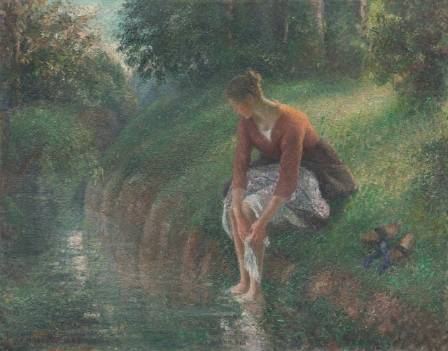
A British landscape painter of the Victorian era, Creswick was known for his detailed, pastoral scenes. This painting likely embodies the Romantic sensibility, featuring an ancient, perhaps ruined, structure by a tranquil river. His work evokes a sense of nostalgia, peaceful harmony with nature, and the picturesque beauty of the English countryside.
5. Emanuel Phillips Fox – Venice (c. early 1900s)
An Australian Impressionist, Fox painted this work during his European travels. It captures a sun-drenched Venetian canal, probably with a focus on the play of light on water and stone. His style, influenced by French Impressionism, would have used bright, clear color and fluid brushwork to convey the warmth and vibrant life of the city.
6. Thomas Moran – Moonrise, Chioggia, Venice (c. 1890s)
Though famed for his monumental landscapes of the American West, Moran also painted in Venice. This work focuses on the fishing town of Chioggia. It would showcase his mastery in depicting atmospheric effects—here, the soft, silvery light of the moon reflecting on calm water, creating a scene of serene, poetic beauty distinct from his dramatic western vistas.
7. Fritz Thaulow – Antwerp (c. late 19th Century)
A Norwegian painter associated with Impressionism, Thaulow was particularly celebrated for his scenes of water. This painting of the port city of Antwerp would likely emphasize the reflective quality of the Scheldt River or its canals, capturing the interplay of boats, industrial elements, and sky with vigorous, expressive brushstrokes.
8. Caspar van Wittel – Posillipo with the Palazzo Donn’Anna, Naples (c. 18th Century)
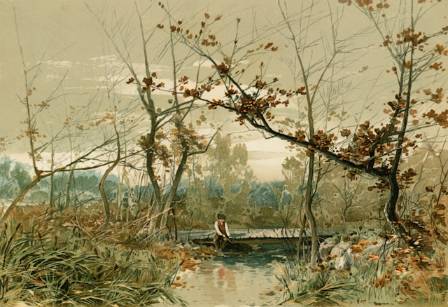
Also known as Vanvitelli, this Dutch painter was a pioneer of the veduta (detailed cityscape) genre in Italy. His work is characterized by precise, almost topographical accuracy and clear, balanced composition. This painting would present a panoramic, sunlit view of the Naples coastline, meticulously rendering architecture, water, and the expansive Bay of Naples with a calm, classical order.
9. William MacGregor Paxton – Gloucester Harbor (c. early 20th Century)
An American painter of the Boston School, Paxton was influenced by both Impressionism and the Old Masters. This harbor scene would likely combine a realistic depiction of boats and docks with a sensitive treatment of light and atmosphere. His style often featured a polished finish and a focus on the effects of light on form and color, applied to a classic New England maritime subject.
10. Claude Monet – The Grand Canal, Venice (1908)
From his seminal series painted during a 1908 visit, this work represents Monet's late style. He focuses less on the specific architecture and more on the essence of light and color dissolving forms. The palace façades and their reflections become vibrant mosaics of paint, where the subject is the luminous, shimmering atmosphere of Venice itself, pushing perception toward abstraction.
The Artistic Appeal of Waterways
This collection illustrates how rivers and canals serve as versatile subjects that unite nature, human industry, and urban life. For artists, they provide a dynamic mirror for the sky, a challenge in capturing fluid movement, and a framework for structuring a composition. From the topographic clarity of Van Wittel to the atmospheric dissolution in Monet's late work, these paintings demonstrate the enduring power of waterways to inspire artistic innovation and capture the reflective soul of a landscape.
Nearby stops
 STOP
· en
The Most Popular Hat Styles of the 21st Century
Joren Wade
 STOP
· en
How to Draw a Capybara
Luna Hart
 STOP
· en
Essential Guide to Wood Coffee Tables: Natural Warmth and Timeless Style
Aaron Benjamin Hawthorne
 STOP
· en
Flight of an Air Rocket
Nina Blake
 STOP
· en
Top 10 Craziest Chameleon Facts
Callum Hayes
 STOP
· en
7 Fascinating Facts About Felt
Ryan